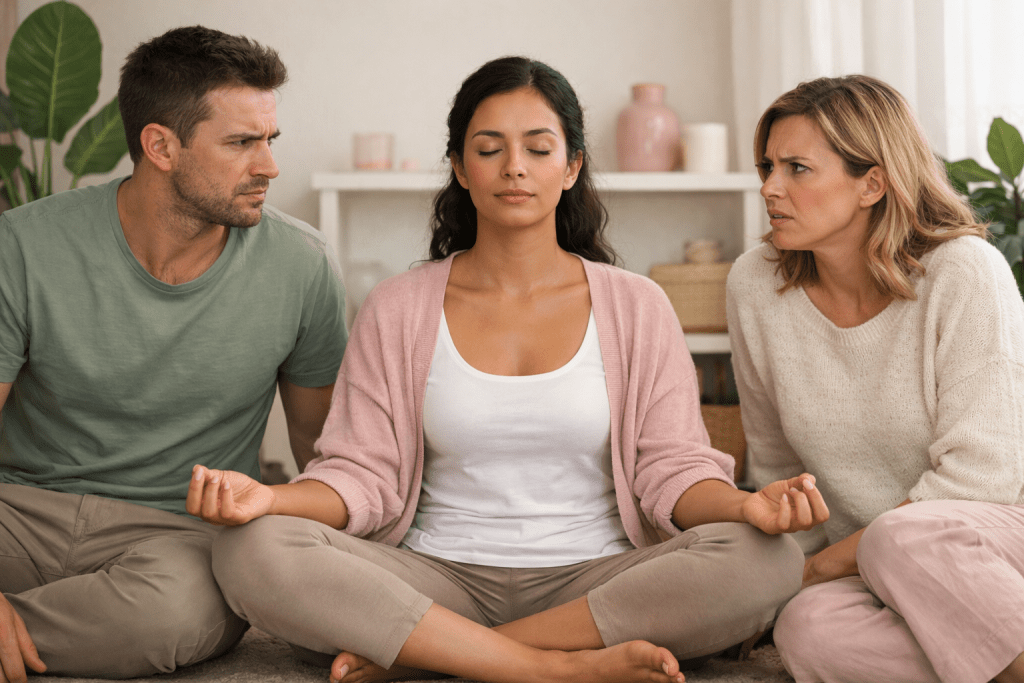
End a fight and move on
Learn from Global Leaders in Mediation & Alternative Dispute Resolution
• How do I resolve a conflict at work?
• Who can help me make a co-parenting plan?
• How do I divorce without a lawyer?
• What are my alternatives to suing a business partner?
• Where do I find a neutral party to resolve a dispute?
Mediation is one of the most used alternative dispute resolution practices. It is a collaborative process: a neutral third party (the mediator) helps disputing parties find mutually acceptable solutions. It is widely used across legal, corporate, and community settings to resolve conflicts efficiently and effectively. It fosters better relationships and sustainable outcomes. It is a type of alternative conflict resolution with a proven concept.

Family Mediation, Dispute Resolution for Divorce, (Co)-Parenting & More

Alternative Dispute Resolution in General Conflicts (coming soon)

Disagreements, Disputes and Mediation at Work

Conflicts in Communities (coming soon)
Community Facilitation, Mediation and ADR (coming soon)

Business & Commercial Conflicts (coming soon)
Dispute Resolution in Business & Commercial Negotiations

Conflicts with Neighbours (coming soon)
Fights, Disputes, Conflicts with Neighbours (coming soon)
Who helps me resolve disputes? How do I learn to resolve them myself?
Mediation professionals offer impartial and confidential guidance to help you resolve disputes amicably. Whether you face legal, workplace, or community conflicts, experienced mediators facilitate productive discussions to reach mutually beneficial agreements.
If you are interested in learning to help resolve conflicts yourself – whether you use it in negotiations, mediations or social dialogues – become a mediator at an accredited institution.

How does mediation work?
If you are in a fight with a co-worker, spouse, business, a school mate, and you cannot resolve it yourself, then mediation is your answer. Mediators actively understand what your positions, interests and fears are. They guide the process of a mediation, while you and the other party (parties) own the outcome. Mediators create a safe space in which everyone is heard and understood.
Mediators help you find potential resolutions with the parties you are in conflict with. It is much more affordable and quicker than litigation, and it helps mend relationships through collaborative problem-solving. It empowers you and others to control outcomes and it assists in creating agreements that address underlying issues transformatively.


What, who, where, why – Global Mediation Resources and Insights
Explore our comprehensive informative resources in mediation, ADR, negotiation and peacebuilding. Register for worldwide mediation competitions, read up on case studies in conflict resolution, attend events such as free webinars or recommendable Podcasts discussing alternative dispute resolution.
In a conflict? Choose your own solution.
Connect with us – join the community!