Author: Barbara du Preez-Ulmi

  • Online Mediation: Because Peace Doesn’t Have to Be In the Same Room

    Online Mediation: Because Peace Doesn’t Have to Be In the Same Room

    You may have heard of online mediation and thought, “So… two people yelling at each other while staring at little Zoom tiles?”

    Relax. Unpack that mental image. Grab a cup of tea. And let’s talk about why online mediation – done well – is actually one of the most practical, gentle, and impactful ways to resolve conflict today.

    1. It’s Convenient (Seriously Convenient)

    Gone are the days when everyone had to sync calendars, wake up early, beat traffic, find parking, battle public transport delays, and shuffle into a room hoping not to lose emotional composure before the session even starts.

    With online mediation, you can join from:

    • your living room
    • your home office
    • your workplace
    • somewhere in between

    No travel. No childcare logistics – especially in family mediation sessions. No negotiating what time works for everyone else. This means less friction before the session even begins – and more energy devoted to the conversation itself.

    2. It Saves Time and Money (Important in Real Life)

    Here’s a truth universally acknowledged:

    Time is precious – and conflict drains it fast.

    Online dispute resolution (ODR) cuts out travel time, reduces scheduling chaos, and often allows parties (and mediators) to fit sessions into their real lives instead of rearranging those lives around the mediation. This alone can dramatically reduce the cost – both in actual travel costs and in time you can’t get back.

    Plus, sessions can often be booked sooner, which means you’re more likely to tackle conflict before it becomes entrenched, costly, or exhausting.

    3. Comfort Counts (A Lot)

    Not everyone thrives sitting in a stranger’s office — especially when emotions are high.

    Being in your own space – whether that’s your favourite chair or a quiet home office – can actually help you:

    • feel safe
    • think more clearly
    • stay focused
    • regulate emotions better

    It’s easier to bring your full self into a conversation when you’re not already tense from logistics. And that emotional ease matters. ‘Cause conflict isn’t just cognitive – it’s somatic (bodily).

    4. A More Neutral, Less Intimidating Environment

    For some people, walking into a formal mediation room feels heavy, high stakes, or just plain stressful. They may feel watched, judged, or on edge – even if the mediator is kind and neutral.

    In an online space, the power dynamic changes subtly but meaningfully. There’s no single physical space to “own,” no one person’s desk to loom over, no awkward shake-hands-and-hope-for-the-best moment.

    Everyone arrives equally: a box on the screen. And sometimes that neutral space opens up communication in ways the traditional room never could.

    5. Everyone (Really Everyone) Can Bring Their Best Decision-Maker

    One of the oft-forgotten benefits of online mediation is that it actually makes it easier for key decision-makers to attend.

    In traditional mediation, bosses, company representatives, HR leaders, or financial decision-makers may be miles away, tied up in meetings, or simply unwilling to travel for a one-hour session.

    Online? Suddenly their calendar can make room. And that means resolutions that stick.

    6. Excellent Access for People Everywhere

    Whether someone:

    • lives rurally
    • has mobility challenges
    • juggles multiple roles
    • is in another time zone
    • or simply can’t make a physical meeting

    – online mediation removes a huge barrier. No matter where you are in the world, you can sit in a neutral space together that’s safe, structured, and led by a trained professional.

    This matters not just for conflict resolution – but for fairness, equity, and access to processes that help restore relationships.

    7. Digital Tools Can Make Mediation Even Better

    Online platforms aren’t just “rooms on a screen.” They’re powerful tools mediators can use to:

    • share documents in real time
    • display agreements or visuals
    • manage breakout sessions
    • send follow-up notes instantly

    Some online mediation setups even allow for secure storage of agreements and easy future reference – which means clarity after the conversation ends. 

    Dispute Resolution Without Borders

    Online mediation isn’t a second-best alternative to “real” mediation.

    It is real mediation.

    The same structure.
    The same neutrality.
    The same carefully facilitated conversation.
    The same focus on clarity, dignity, and sustainable agreement.

    The only thing that changes is the room.

    And sometimes, changing the room changes everything.

    When geography, packed calendars, mobility constraints, or organisational complexity would otherwise delay – or derail – a constructive conversation, online mediation removes the friction. It creates access. It creates flexibility. It creates possibility.Conflict rarely resolves itself by waiting.
    But it often resolves when people finally have a practical way to sit down – even if that “table” is digital.

    For Those Working Across Borders

    For individuals, teams, and organisations operating internationally, online dispute resolution is no longer just convenient – it is essential infrastructure.

    Different jurisdictions.
    Different time zones.
    Different legal cultures.
    One structured process.

    At One World Mediators, online dispute resolution is designed specifically for cross-border workplace mediation, remote-first companies and organisations with international representation. The process is fully structured, professionally facilitated, and built for situations where physical proximity simply isn’t realistic — but resolution is still necessary.

    If you’re navigating conflict across countries, cultures, or corporate layers, you can explore how international online mediation works in practice here:

    Banner leading to One World Mediators, specialising in online mediation for family and workplace matters.

    Alternatively, share your details and a short note and we take it from there:

    ← Back

    Thank you for your response. ✨

  • What does a mediator do? Meditate?

    What does a mediator do? Meditate?

    A mediator may meditate. As a matter of fact, I do. When I mediate, I don’t. Imagine I sat between you and your partner, meditating on your issue – while you watch and wait. No. I mediate your conflict. Here is the difference:

    You and your partner have been going at each other for weeks. You probably can’t even remember what ticked the fight off. You avoid each other, don’t look into each others’ eyes, don’t touch each other. But there are those moments when you just want to sort it out. Get over it. Be heard. Be understood. So you try and explain yourself. But your partner feels that you are confronting them – that your words are loaded. While you speak, they interrupt you. Turn their back on you. Treat you with silence. And when they speak, you cannot listen – as you are overwhelmed by your own emotions, your position, your own truth. And they, by theirs.

    What can you do?

    Well, you can meditate on it. You step away from the sharp edges of the argument and turn inward. Your breath slows. One steady inhale, one deliberate exhale. And with it, the urge to defend, to interrupt, to win begins to soften. You let the anger speak silently and then pass, making room for what sits beneath it: hurt, fear, care.

    In that quiet space, you feel your shoulders drop and your jaw unclench, and a different intention settles in. When you open your eyes again, you are still in the conflict, but no longer consumed by it; you are calm enough to understand, grounded enough to be heard, and present enough to let something new grow between you.

    Yet an hour later, your partner opens the argument again, hurls accusations at you, may even become demeaning. Now you want to shout – why don’t you listen to my story? My pain? My needs? Can I please explain myself, can you please just sit and listen? Now be honest. Could you do that? Could you give your partner the same? Hand to heart.

    This is where a mediator comes in

    A mediator is that person you wish upon in a heated argument. That person who just watches and listens, makes sure both of you get the time to say whatever it is you need to say – without swearing, interrupting and shouting. Now that could be any third-party person, isn’t it? Like a neighbour, an older family member, a friend? Not quite so. You need someone who does not know any of you personally. No history. No connection. As a matter of fact, mediation is a profession that has to be learnt and practiced. While no human being can ever be completely bias-free, mediators are trained to be all-partial, non-biased, non-judgmental, non-advisory (depending on their style!), and to guarantee confidentiality.

    Mediators give you what you crave the most: space and time to be seen, heard, understood. Not only do we give that to you, but also to your partner. You either sit in the same room with a mediator, or you participate in a conflict resolution session online.

    • A mediator gives you both equal time: they listen to understand. Not to take sides – to understand.
    • A mediator also gives you equal empathy: they hold the space for both of you without judgment, without prejudice.
    • A mediator gives you the opportunity to find a resolution to your argument together – without doing that for you.

    And the safer you feel in that space, the more easily you both start to breathe.

    Not your cup of tea?

    All of this may sound strange to you. Feely-touchy. Maybe you don’t want to stop fighting – perhaps you draw energy from it. Yes, while you are in the spiral of conflict, it may be how you feel. You can resolve it yourself, right? No need for strangers to listen in? Okay. And how far has that gotten you in life?

    Maybe you want to give it a try. With each breath, a little more space opens up, and in that space comes the possibility of truly being heard. From there, mutual understanding is no longer forced or negotiated – it’s simply given room to emerge. Instead of holding your own position as the ultimate truth, you are starting to see your partner’s pain, fear, and point of view. Instead of finger-pointing at them, you start looking at yourself. Instead of blaming, you start taking responsibility for the situation and for the outcome you both want to achieve: a resolution to your argument. A newly found peace.

    If you are holding a cup of tea, and someone bumps into you, and you spill that coffee – why did you spill that tea?

    Because somebody bumped into you, right? No. You spilled your tea because there was tea in your cup. So – if you are in an argument, and your partner attacks you, and you explode- why did you explode? Because he attacked you? No. You exploded because of that “tea” – because of whatever you are carrying inside of you. Like anger, deep sadness, hatred, or fear.

    If you are able to see that – then with your next argument, when your partner rubs you up the wrong way, you are able to spill something completely different: love, compassion, understanding. That is transformative. You may reach this stage of understanding by meditating. But a mediation of your dispute is more far-reaching, and lasting – as it involves the other party.

    Need help with a dispute? Contact One World Mediators for online, virtual sessions anywhere in the world:

    Banner leading to One World Mediators, specialising in online mediation for family and workplace matters.

    Alternatively, share your details and a short note and we take it from there:

    ← Back

    Thank you for your response. ✨

    Disclaimer: The only AI element in this blog article is the header image. The article is authentic, and written by Barbara Du Preez-Ulmi, founder of Leaders in Mediation,

  • Leadership at Altitude: What the “Overview Effect” Teaches Us About Conflict in 2026

    Leadership at Altitude: What the “Overview Effect” Teaches Us About Conflict in 2026

    What astronauts learn in orbit, leaders should practice on the ground: distance before decision, perspective before power.

    When astronauts rise above Earth, they see something remarkable: a planet without borders, without divisions, without the artificial lines we draw across land and between people. As astronaut Bill Nelson observed from space:

    “In space, you don’t see boundaries or borders. We are all citizens of Earth.”
    – Bill Nelson, Astronaut

    From orbit, national flags melt into oceans and continents, and what remains is a single, interconnected system, fragile and shared. This shift in perspective is so profound it has its own name: the overview effect.

    In mediation and organisational leadership, this insight offers a powerful metaphor and a practical discipline for how we approach conflict.

    Zooming Out: The Strategic Pause

    In day-to-day conflict, reactions are often driven by proximity. They are emotional. Leaders respond to what is loud, urgent and visible. Yet conflict rarely belongs to the moment alone. More often, it is shaped by systemic pressure: organisational structures, unclear mandates, competing incentives, cultural dynamics or patterns of communication that have developed over time.

    When leaders stay too close to the dispute, they address symptoms rather than causes.

    Conflict escalates at ground level. Resolution begins when we gain altitude.

    Just as an astronaut does not react the moment they see weather patterns forming on Earth, effective leaders create a strategic pause. This pause is not avoidance. It is an intentional act of observation, allowing space to identify patterns, understand context and distinguish urgency from importance.

    Gaining altitude reveals the forces that push people into opposing positions. It allows leaders and mediators to respond from insight rather than instinct, and to intervene where change is actually possible.

    Need help with a dispute? Find a Mediator:

    From Reaction to Responsibility

    Perspective does more than clarify. It reshapes responsibility. Up close, conflict feels personal: positions harden, narratives narrow and blame finds easy targets. From altitude, a different picture emerges. Individuals are often responding rationally to pressures within a system that no longer serves its people well.

    This is where leadership maturity shows.

    When leaders rise above positions, systemic pressure becomes visible, and resolution becomes possible.

    Leaders who adopt an overview mindset move away from winning arguments and towards stewarding systems. They understand that calm, proportionate responses build trust, while reactive certainty often deepens division. By holding a wider view, they create conditions for cooperation, psychological safety and sustainable resolution.

    Systems thinking in conflict is not abstract theory. It is a practical leadership skill, one that reduces escalation, shortens resolution cycles and protects organisational health over time.

    A New Year Resolution Worth Practising

    As a new year begins, tensions will inevitably surface in teams, boards, partnerships and workplaces. The question is not whether conflict will arise, but how leaders choose to meet it.

    The overview effect reminds us that boundaries may appear solid up close, yet dissolve when seen in context. Conflict-ready leadership embraces this reality. It resists premature judgment, tolerates complexity and creates space for understanding before action.

    Leaders who lead at altitude are not detached. They are attentive, disciplined and grounded. They see the whole before fixing a part and, in doing so, enable outcomes that endure.

    One regular source of conflict at work lies in how we set, interpret and prioritise key performance indices; performance management often shapes behaviour before people even realise it. Traditional KPIs like sales targets or efficiency percentages are clear and tangible, but they seldom measure what actually motivates, energises or sustains performance.

    When leaders rely solely on those numbers, they risk overlooking the very human dynamics that drive retention, innovation and psychological safety. What gets measured drives behaviour, and if you are not measuring collaboration, communication quality or conflict readiness, you will inadvertently reward short-term outputs rather than sustainable performance. For a deeper look at how human-centred metrics like psychological safety and conflict competence quietly shape growth and team resilience, read the following blog:

    My New Year Wish For All Leaders

    As we move into the year ahead, may your leadership be guided by perspective rather than pressure. May you pause long enough for patterns to emerge and act with clarity shaped by the whole, not just the moment. Conflict may be inevitable, but when met with altitude, it becomes an opportunity for learning, alignment and lasting resolution.

    If you cannot manage conflict at work inspite of your great orbiting abilities, or if you feel too close to the dispute at hand, let expert workplace mediators assist you:

    ← Back

    Thank you for your response. ✨

  • The Hidden KPIs Driving 2026 Growth: Why Conflict-Ready Teams Outperform Every Time

    The Hidden KPIs Driving 2026 Growth: Why Conflict-Ready Teams Outperform Every Time

    A data-driven look at how psychological safety, conflict competence and human-centred performance indicators shape productivity, retention, innovation and long-term business growth.

    As the final quarter of 2025 draws to a close, companies around the world are racing to wrap up the year’s hard numbers: KPIs, SMART goals, profit-and-loss, performance dashboards. Much like in Santa’s workshop, there is a whirl of measuring, weighing, packaging, presenting and rewrapping.

    While it’s usually straightforward to quantify your Net Promoter Score, sales performance or marketing growth statistics, it becomes far more complex when you try to measure human metrics: conflict management skills, communication styles, innovation capacity, mental health and psychological safety.

    Yet these often-overlooked parameters (too often dismissed as “soft skills” or “nice to haves”) form the foundation of sustainable success. They influence company growth, brand perception, customer satisfaction, staff turnover, absenteeism and, ultimately, whether people still feel passionate about their work.

    The Hard Cost of Ignoring Human Metrics

    The numbers every leader needs to see before planning 2026

    The global data is crystal clear:

    ➤ Poor mental health costs the world USD 1 trillion every year in lost productivity
    (WHO)

    ➤ 59% of employees worldwide are disengaged
    (Gallup, 2024)
    Disengagement alone can drain 15 – 20% of total payroll.

    ➤ Stress-related absenteeism accounts for more than 50% of lost working days
    (ILO)
    Average cost per employee: USD 3,000+ per year
    (Deloitte, 2023)

    ➤ Replacing an employee costs 6 – 9 months of their salary
    (SHRM)
    This number increases substantially in leadership and technical roles.

    ➤ Team conflict is among the top three reasons startups fail
    (Harvard Business Review, 2023/ Professor Noam Wassermann)

    These numbers don’t describe “soft issues.” They describe structural weaknesses that directly affect EBITDA, productivity, innovation cycles, and customer experience.

    If growth is your objective for 2026, the real question becomes:

    What if the most overlooked performance indices are not financial, but human?

    Whose Job Is It to Manage These Metrics?

    The short answer: all of us.
    The deeper answer: leadership sets the tone, but shared responsibility sustains the culture.

    • Leaders model communication, active listening, emotional regulation and conflict response. Psychological safety rises or falls with their behaviour.
    • HR creates systems, processes and support structures – but cannot be the sole guardian of culture.
    • Employees co-create communication norms, signal early tensions and shape the conflict climate daily.
    • Teams, collectively, decide whether conflict becomes a catalyst for innovation or a slow-burning organisational risk.

    Passion dies not because the work is hard, but because the way work is led becomes constricting, controlling or disconnected from human motivation – Labourflaws.com

    Let’s Move the Needle from Key Performance Indices to KEY PEOPLE Indices

    Businesses routinely try to measure culture through surface-level perks: espresso machines, yoga classes, free fruit, casual Fridays.
    But passion, engagement and psychological safety are not built through perks.

    They are built through:

    • how people speak to each other
    • whether difficult conversations are avoided or addressed
    • whether leadership listens or dismisses
    • whether conflict is managed early or buried until it becomes corrosive
    • whether people feel safe to say, “I’m struggling,” without consequences

    This creates the difference between measuring what was delivered and measuring the lived experience behind the delivery.

    What to Measure Instead

    1. Regular Temperature Checks
    Short pulse surveys on stress, clarity, fairness, workload sustainability and emotional climate.

    2. Quality of Communication
    Meeting behaviour, interrupting patterns, conflict avoidance, constructive challenge – measurable through peer feedback and observation.

    3. Recognition and Appreciation
    Employees who feel recognised are 4x more engaged. (Gallup)

    4. Autonomy and Flexibility
    Perceived or actual control strongly predicts productivity, innovation and wellbeing.

    5. Shared Goals That Inspire Passion, Not Just Compliance
    Reframing matters.
    Instead of “Acquire 70% more customers,” a human-centred KPI might read: Create a work environment that energises us to reach and delight more customers together.

    Purpose fuels passion. Passion fuels performance.

    6. Speak-Up Culture Metrics
    Frequency of upward feedback, psychological safety scores, retaliation reports, issue escalation patterns.

    7. Conflict-Readiness Indicators

    • Number of issues resolved early
    • Time-to-resolution
    • Employee-reported fairness and clarity
    • Depth and quality of “repair conversations” after tense moments

    Healthy organisations don’t avoid conflict. They manage it early, openly and skilfully.

    How the New Generation Sees It: Data on Startups and Emerging Leaders

    Startups and young companies, especially in tech and innovation sectors, are adopting conflict-ready, psychologically safe cultures as non-negotiable infrastructure.

    Recent findings:

    • Gen Z values mental health and psychological safety more than salary
      (Deloitte Global, 2024)
    • Teams with explicit conflict norms grow up to 35% faster
      (MIT Sloan, 2024)
    • Startups cite unaddressed interpersonal conflict as a top contributor to failure
      (HBR, 2023)
    • Younger founders intentionally design communication rules, peer feedback loops, and mediation structures to prevent the classic “startup implosion.”

    In other words, the next generation already lives what established companies are still learning: Conflict competence and psychological safety are not soft skills.
    They are scalable systems.

    Practical Tips to Implement Human-Centred KPIs That Drive Growth

    Here’s how leaders can begin transforming human dynamics into measurable business value:

    1. Introduce a Psychological Safety Score

    Use the validated 7-question Amy Edmondson framework quarterly. Track changes at team level.

    (One of the most widely used tools in organisational research to measure psychological safety is Amy Edmondson’s 7-item psychological safety scale, originally developed in 1999. Each item assesses team members’ perceptions of safety around mistakes, speaking up, risk-taking and support – and the scale has been disseminated through academic and university-hosted resources such as the University of South Carolina’s organisational development framework.)

    2. Measure Time-to-Resolution for Conflicts

    This reduces both emotional and financial bleed.

    3. Add a Passion & Engagement Index

    Evaluate whether work still feels meaningful, aligned with strengths, and energising.

    4. Implement Repair and Reset Rituals

    After tough deadlines or interpersonal friction, hold structured repair conversations. Track frequency and outcomes.

    5. Monitor Leading Indicators, Not Just Lagging Ones

    Instead of waiting for exit interviews, monitor:

    • early stress signals
    • meeting climate
    • communication breakdown patterns

    6. Train Leaders in Conflict Literacy

    Leadership behaviour is the strongest predictor of team climate.
    Measurable shifts occur when leaders learn to regulate, listen and engage early.

    Need Help With the Above? Bring in a Professional

    Measuring human dynamics is complex. Transforming them is even more complex. This is where a professional mediator, facilitator or conflict resolution coach becomes not just helpful — but strategic.

    At Leaders in Mediation, we help organisations connect with professionals who:

    • map their Key People Indices
    • design conflict-ready operating systems
    • build psychologically safe teams
    • train leaders in conflict competence
    • measure and improve human performance with the same precision as financial metrics

    If you want your 2026 growth targets to stand on more than numbers;
    If you want a workforce that is passionate, resilient and ready for change;
    If you want to reduce conflict costs before they appear on your balance sheet…

    Before Santa signs off for the season, make sure you’ve checked the metrics that matter most: your people. We’re here to help you measure what truly drives performance.

    ← Back

    Thank you for your response. ✨

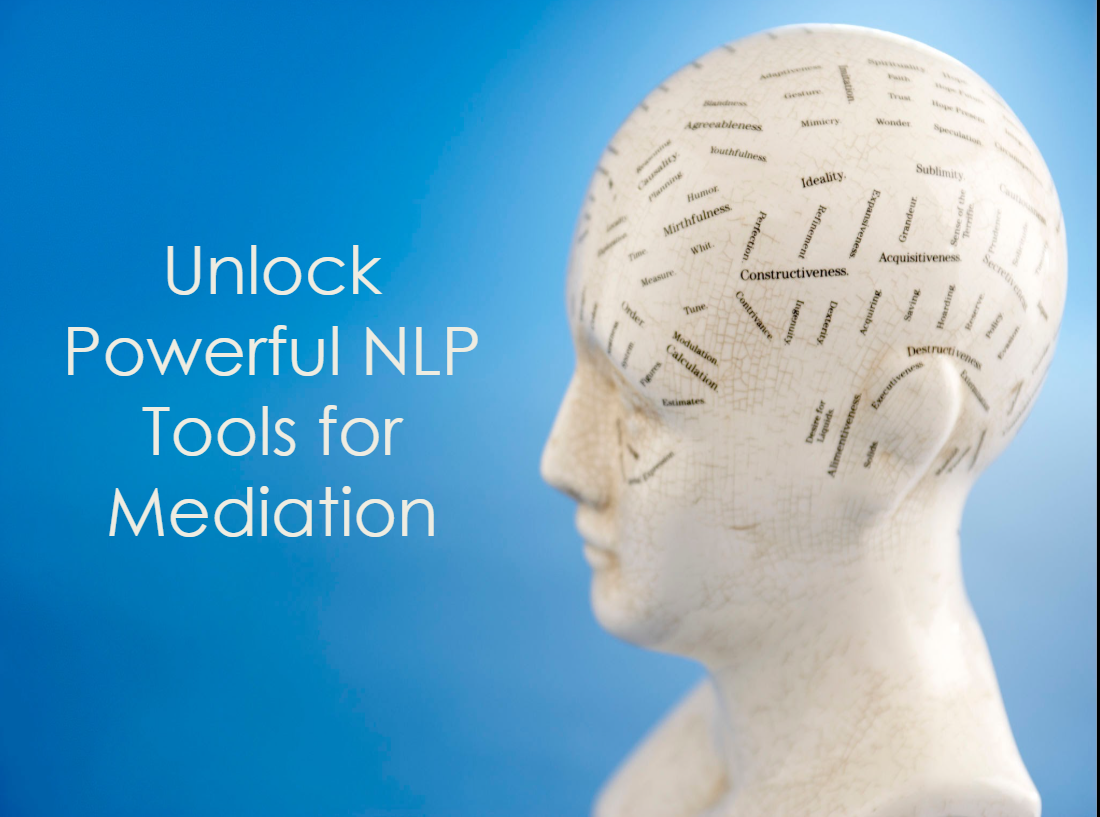
  • Chunk, Clarify, Change: NLP Secrets to Break Deadlock in Mediation

    Chunk, Clarify, Change: NLP Secrets to Break Deadlock in Mediation

    At the end of a tense and long day at the office, Adam* shouts at Scarlett*, “You always ignore me!” The room freezes. Everyone retreats into position.

    Beneath that line lies a concrete memory, a hidden need, and – if you know where to look – a solution. Using simple NLP techniques, you’ll learn how to zoom in on the moment that matters, then zoom out to reveal the interests that open real options.

    Small linguistic moves, big change.

    Neuro-Linguistic Programming gives mediators an evidence-backed toolkit for turning vague accusations into clear, solvable issues. In this article, I’ll show two practical NLP applications. These include Chunking (up and down) and the Meta-Model. I will provide exact questions you can use straight away. You’ll learn how to elicit real examples, uncover assumptions, and help parties reach agreements that actually stick.

    Why NLP Belongs in Mediation

    NLP isn’t mystical or complicated. It simply looks at three things:

    • Neuro: How people process experiences
    • Linguistic: How they express those experiences (with any or all of their senses)
    • Programming: The patterns of thinking and behaviour formed over time

    For mediators, this matters because communication is the work. And NLP gives you micro-tools to move conversations move from stuck to specific and constructive.

    A Film Clip That Says It All

    One of the scenes I use in training comes from Marriage Story, where the couple launches into the classic “You’re just like your father!” / “And you’re exactly like your mother!” argument. It’s the perfect example of vague accusations that feel meaningful but communicate almost nothing. Watch the first 40 seconds (well, try to not watch more!):

    Carry on reading to find out how to use NLP Chunking to help this couple out of their rut!

    Chunking: The Fastest Way to Shift a Conversation

    Chunking** simply means moving up or down the ladder of abstraction.
    It’s one of the most practical, immediately usable tools NLP offers mediators.

    In conflict conversations, we swing between vague emotional statements and hyper-detailed stories. Chunking helps you navigate both. By chunking down, you guide someone from broad, charged language into concrete examples you can actually work with. By chunking up, you lift them out of the weeds and into the bigger picture. You unearth their values, needs, expectations and hopes.

    Together, these two moves form one of the most powerful tools in mediation: helping people shift between “what happened” and “what matters.” It’s a simple technique with a big effect, giving mediators a practical way to ground emotions, reveal meaning, and open space for real solutions.

    Chunking Down: When Things Get Vague, Get Specific

    Use Chunking Down when:

    • Parties are looping
    • Accusations are vague (“You’re exactly like your mother”)
    • You need concrete examples for clarity

    Typical chunk-down questions:

    • “Can you give me one example?”
    • “What exactly happened?”
    • “What specifically do you mean by that?”
    • “How did you feel in that moment?”

    Applying it to the Marriage Story clip

    From the clip:

    “You’re acting like your father.”

    Chunking Down might sound like:

    • “Which specific behaviour reminded you of your father?”
    • “What exactly triggered you in that moment?”
    • “What did you see or hear that made you think of him?”

    Chunking Up: When Details Become a Rabbit Hole

    Use Chunking Up when:

    • Parties are stuck in micro-details
    • Emotions escalate inside very specific stories
    • You want to surface values, needs, or the bigger picture

    Chunk-up questions sound like:

    • “Why is this important to you?”
    • “What’s the bigger goal here?”
    • “What do you need to feel respected (or safe / heard / supported)?”

    Applying it to the scene again

    Instead of getting lost in whose parent did what, you shift the frame:

    • “What does a healthy partnership mean to each of you?”
    • “What values do you bring from your families – and which ones do you not want to repeat?”
    • “What is the actual need behind the comparison you made?”

    These questions help you take the emotional charge of an argument and redirect it into understanding.

    Practice: Chunking in Action

    Over to you. Put into practice what you read! Download my workshop presentation for NLP Tools in Mediation and play with Chunking Up and Down questions. Try with three chunk-down and three chunk-up questions, and notice the emotional shift in each.

    • “I can’t work with him. He never listens.”
    • “She always puts the kids’ needs above mine.”
    • “I’m drowning in tasks; nothing is clear anymore.”

    Stop yourself from digging too deep – one can get carried away with this. You don’t want to become Sherlock Holmes and start interrogating. Self-awareness is always key. Zoom back out!

    The Meta-Model: Language Patterns That Reveal Assumptions

    When we are in conflict, we rarely say exactly what we mean. Actually, we rarely really say what we mean in any conversation! Instead, we speak in shortcuts: sweeping statements, emotional summaries, or half-formed assumptions. The NLP Meta-Model helps you gently unpack these shortcuts by listening for distortions, generalisations, and missing information. It’s not about catching people out. It’s about understanding what sits underneath their words. This way, you can guide them toward clarity. For mediators, the Meta-Model is a powerful way to reveal what someone is really trying to express: the beliefs, needs, fears, and stories that drive their reactions.

    The NLP Meta-Model trains your ear to recognise three patterns:

    1. Generalisations

    “You always ignore me.”
    “He never talks to me.”

    Ask:

    • “Always?”
    • “Can you give a recent example?”

    2. Deletions

    “We have a problem with our communication.”
    “Something is wrong.”

    Ask:

    • “What specifically?”
    • “What tells you it’s a problem?”

    3. Distortions

    “She doesn’t like me.” (Mind-reading)
    “That’s not possible!” (Untested assumptions)

    Ask:

    • “How do you know?”
    • “Under what conditions might it be possible?”

    This is where mediators can turn emotional statements into understandable, actionable information. And once parties hear themselves reduce a sweeping statement to one specific moment, something softens.

    Putting It All Together – Your Toolkit

    When you combine Chunking + the Meta-Model:

    • Accusations turn into descriptions
    • Descriptions turn into values
    • Values turn into needs
    • Needs turn into agreements

    Small linguistic shifts create big changes.
    Mediators do this gently, without interrogating or invalidating.

    Free Download: NLP Tools for Mediators (Mini Guide)
    Includes the Chunking model, Meta-Model question prompts, and practical exercises.

    In Closing

    You already use many of these techniques intuitively. NLP just gives them names and a structure you can rely on when things get emotionally charged or stuck. Whether you’re working with families, teams, or executives, Chunking and the Meta-Model help you guide people out of accusation and into meaning.

    And once there’s meaning, solutions follow surprisingly fast.

    *Adam and Scarlett are fictional names and may or may not relate contextually to the movie clip in “Marriage Story” 🙂

    **There is also lateral chunking, but for the sake of this article, I kept it simple.

  • A Mediator’s Guide: How to Keep the Peace at Christmas (And Still Enjoy Your Family)

    A Mediator’s Guide: How to Keep the Peace at Christmas (And Still Enjoy Your Family)

    Ah, Christmas; the season of twinkling lights, festive music, and… family tension. For many of us who do celebrate it*, the lead-up to the holidays brings joy and anticipation. Yet the season can also stir up underlying conflicts. Different traditions, competing expectations, co-parenting schedules, in-law dynamics, and the logistics of traveling between homes. As mediators (and as humans), we know conflict does not have to overshadow the magic of the season. With a little planning, empathy, and creativity, you can help your family celebrate with more connection and less stress.

    Here are some practical and fun mediation-informed strategies to help you avoid and manage conflict in the weeks before Christmas.

    1. Start with intentions; not just invitations

    Before the invites go out, pause and ask: What do we really want this Christmas to feel like?

    • Host a small expectations check among the adults and children; maybe over coffee or in a group chat.
    • Encourage each person to share their hopes and concerns for the holiday.
    • Ask open questions that create space rather than shut it down. For example: What are your non-negotiables this year, and what would help you feel seen and respected).
    • Co-create a shared vision, even if it is a simple one. A common direction helps avoid assumptions that lead to unnecessary tension.

    2. Coordinate co-parenting plans early

    If separation or divorce is part of the picture, Christmas logistics can quickly become a minefield. If you haven’t done so already, keep the following in mind for next Christmas. After all, it takes some time, depending on how well you communicate with each other. Also, some travel and holiday plans may already have been made. If you are in need of emergency help, contact a mediator.

    • Use mediation-style communication (open questions, listen actively and summarise to make sure you understood correctly, stay curious rather than judgmental). Schedule a calm planning moment rather than discussing it on the fly.
    • Create a written outline of the festive schedule (Christmas Eve; Christmas Day; travel time; gift exchanges; buffer time).
    • Build in flexibility. Creating time windows rather than rigid timings allows for unexpected changes.
    • Get creative. Some families rotate Christmas Day each year; others create new traditions that work for the family as it is now.
    • Make sure to include your children (if old enough to join the discussion). They are just as much part of this as you are.

    3. Communicate thoughtfully

    Communication is the glue; when done well, it can prevent conflict from boiling over.

    • Practice active listening. Let people speak fully, then paraphrase to show that you have understood. Avoid thinking of your response while the other person is speaking; listen to understand first.
    • Use “I” statements instead of “You” statements. For example: I feel stressed by tight travel plans (rather than: You are making this impossible).
    • Focus on impact and underlying needs and emotions. Invite people to explain why something matters to them, not only what they want.
    • Encourage curiosity. If a request sounds inflexible, ask: Tell me more; what makes this important for you.

    4. Anticipate tension points and plan around them

    Once you know where the likely pressure points lie, you can soften them before they escalate.

    Common TriggerMediator-Inspired Strategy
    Food or catering clashesBuild a flexible menu; divide responsibilities; allow multiple options without judgement.
    Travel stressClarify who is responsible for pick-up and drop-off; plan for delays; offer alternatives like staying overnight.
    Personality clashesIdentify hot topics in advance and agree on safe conversation zones; allow breaks.
    Different holiday wishesCo-create a simple holiday roadmap; mix traditions; rotate locations.

    5. Build boundaries with kindness

    Boundaries do not need to feel like exclusion. When framed well, they feel like respect.

    • Consider creating a light boundary agreement (for example: expectations around alcohol; guest behaviour; start and end times).
    • Invite a neutral person to help set boundaries if needed (a respected family member or a professional mediator).
    • Validate emotions first. For example: I can hear that opening presents together is important to you. I also hear that some of us prefer a slower start in the morning.

    6. Embrace good enough traditions

    Perfection is the enemy of joy; especially during the holidays.

    • Allow new traditions to emerge. They might suit the current family structure better than the old ones.
    • Focus on meaning rather than appearance. A simple shared moment can be more memorable than the perfect table setting.
    • Release the word “should”. If someone feels pressured, invite them to imagine a no-pressure scenario. Ask them: If nothing had to be perfect, what would your Christmas look like?

    7. Practise emotional self-regulation

    No matter how well you plan, emotions will come up. Preparing your own responses makes a significant difference.

    • “Do I need” check-ins: Pause and name what you need (rest; space; reassurance).
    • Use simple de-escalation techniques. Step outside for fresh air; shift the topic; introduce gentle humour.
    • Take the balcony perspective: step above the situation, observe calmly, and decide what needs addressing versus what can be released.

    8. Know when to call for help

    Even during the holidays, outside support can make all the difference.

    • If long-standing issues resurface every year, consider a short mediation session in early December.
    • Use mediation to clarify child arrangements, boundaries, and communication structures before the emotional load of the season arrives.
    • Remember, mediation does not judge; it supports clarity, respect, and connection. It supports solutions that benefit all in one way or another – nobody loses in mediation, there are only winners.

    9. Celebrate progress, even if small

    Conflict resolution is rarely all or nothing.

    • Acknowledge when someone compromises, listens well, or contributes positively.
    • After Christmas, reflect together (or privately). What went well; what surprised you; what could be changed next year.
    • Use these reflections to build trust. When people feel acknowledged, they are more willing to engage cooperatively in future planning.

    Final thought: Conflict can be part of the gift

    Here is the paradox: conflict does not only threaten the holidays; it can also reveal opportunities for growth and understanding. Differences are natural in families with diverse histories, personalities, locations and expectations. With intention, empathy, and a mediator mindset, conflict can become a pathway to deeper connection.

    This Christmas, let your guiding question be: How can we end up in genuine understanding?

    Footnote
    *Not everyone celebrates Christmas and as a mediator, I honour and respect all traditions, practices, and beliefs. This article speaks specifically to those navigating Christmas-related family dynamics.

    Do you need help navigating Christmas with a Mediator this year?

    Try get all the parties that are involved in the decision-making to sit around one virtual table. Schedule a mediation session with a mediator. Online, efficient, and affordable. Contact Us!

    ← Back

    Thank you for your response. ✨

  • Connection between Conflict, Consciousness and Chronic Trauma

    Connection between Conflict, Consciousness and Chronic Trauma

    The benefits of working through a conflict with a neutral mediator

    Two monks once walked alongside a river. As they got around the next bend, they saw a woman on the other side of the river. She was carrying a basket full of fresh vegetables from the market, and she was clearly distressed. She called out to them, asking to help her across the river.

    Now those monks had taken vows to never touch a woman. Without a word, the older monk stepped into the river, crossed over to the other side, picked her up and placed her gently on the other side, before continuing on his journey alongside the other monk. After about an hour of walking in silence, the younger monk asked: “As monks, we are not permitted a woman, how could you then carry that woman on your shoulders?”, to which the older monk replied: “I set her down on the other side of the river, but you, brother, are still carrying her”.

    You may be familiar with this well known Zen story. Like the older monk, so do you always have a choice when it comes to how you react when you face an issue or a conflict. You can choose to ignore the conflict, run from it, fight it, or resolve it and move on. What do you think is the healthiest thing to do?

    Unresolved conflicts create traumas, big and small, throughout life

    Any conflict in your life creates a trauma – big or small, consciously noticeable or not. So you can either work through it, then move on. Or you can carry it for the rest of your life. Working through it does not mean to deal with it and forget about it. It means: deal with it, make it conscious, then let it go, and learn from it. Or, you can prolong it into eternity without attempting to resolve it, you can hope for it to just “kind of disappear over time”, or you can run from the situation or person that you are in a conflict with. If you choose the latter, this may well build up as lifelong chronic stress. And chronic stress caused by any trauma has a tendency to rear its head in the most inopportune moment (inopportune to your conscious, but opportune to your subconscious).

    The 95/5 Principle

    If you run from it, or hide, or stay in it – you don’t learn from the conflict, and if you picture your nervous system as a glass of water with all sorts of pebbles in it (=conflicts, traumas, issues), and you drop pebbles in to the top of the rim, without any capacity to intake any more, your glass will be overflowing and cracking up.

    Do you know that in principal, 95% of who we are is stored, programmed, unconscious thinking and experiencing? And only 5% is truly creative, conscious, imaginative? Research shows that for the first 7 or 8 years of our lives – starting in the third trimester of pregnancy – we are in a state of hypnosis, our brains are in theta brainwave state. We copy others, we absorb without any filters.

    To illustrate this: We are in effect downloading software programmes, uncensored, unchecked, onto our harddrive (our brain and body). These programmes of acquired behaviour, knowledge and experience are used throughout the rest of our lives, unless we become conscious and aware of them and change what we want to change.

    To mirror this back onto a conflict you find yourself in: Due to these programmes that are uniquely downloaded to you, including bad ones, you put yourself on constant autorepeat. You think you are in control of your actions and behaviours, but you are not. So when you hit a conflict in life, your body goes into one of two biological imperative modes: growth or protection. This biological imperative is shared by all living things -we want to survive against all odds.

    So, if you put yourself into repeat behaviour every time a conflict occurs, without looking at it consciously, and without working through it – you will stagnate and get stuck in a “fight, flight” or even a “fight, flight, freeze” status. You will also react via autopilot to any potential conflicts before they even happen, via your sensory triggers that constantly compare situations in your life to what your system has learned and encountered in the past. This keeps you in a spiral, and it can potentially store accumulative traumas and add to your chronic stress. And we all know how that affects our health over time!

    What can you do instead?

    Use your 5% of change-friendly, creative consciousness! With the help of a professional mediator, you can deal with the issue or dispute in a processed, clarifying, liberating way. Just like the monk in the Zen story – he made the decision to assist the woman, inspite of conflicting regulations, as it felt like that was the right thing to do, and then he let it go. So assist yourself. Go against your learned programmes of how to deal with conflict.

    With the help of a professional mediator, you can deal with the issue or dispute in a processed, clarifying, liberating way.

    For it to work, you and the other party (parties) to the dispute need to participate in this type of alternative dispute resolution. In a mediation, both you and the other party (parties) own the solution. The mediator guides you through the process and makes sure there is a balance of power, and that core principles of fairness, confidentiality and more are applied. But you are the ones who own the solution to your dispute. And when you find a mutually agreeable solution, you are starting to download new programmes of understanding, and behaviour, onto your harddrive. And this, in turn, helps you deal with any new conflict in a much healthier way – you will tell yourself that you have successfully found solutions before, and mended broken relationships sustainably, so why not now? Right?

    Mediation, somatic experiencing and neurolinguistic programming

    Mediation is a voluntary process, so yes, you would need everybody in a conflict to willingly participate. If you need help with that, a trained mediator can assist you in how to approach the situation. If the other party or parties do not want to attempt a resolution of the conflict, you cannot however force them. In such a situation, there are other ways for you to work through it, change perspectives and let it go. In this case, I suggest you work with a coach, a somatic experience practitioner, or find out more about neurolinguistic programming; one of the modalities that work very well with changing our internal programmes, is to “rewrite your history” with an NLP-coach.

    Looking for an experienced mediator to help you?

  • Holding Your Ground: Navigating Manipulation and the Narcissist in Mediation

    Holding Your Ground: Navigating Manipulation and the Narcissist in Mediation

    Learn how you as a mediator or as someone caught in a conflict can recognise manipulation, rebalance power, and stay emotionally grounded when dealing with narcissistic behaviour.

    The Invisible Tug-of-War in Mediation

    Every mediator knows this moment: one party speaks with calm conviction, the other with charm that borders on control. Beneath the surface, however, the room vibrates with tension. The energy shifts, and before long, one participant begins to doubt themselves – their memory, perception, even their right to feel wronged.

    When this happens, you may be witnessing what narcissistic manipulation feels like in real time. And it can be one of the most destabilising dynamics to manage – both for the mediator and for the person being manipulated.

    Drawing inspiration from Melanie Tonia Evans, a global expert in narcissistic abuse recovery, this article explores how mediators and conflict participants can navigate this specific challenge with awareness, balance, and self-responsibility.

    Recognising the Narcissist’s Playbook

    Narcissists thrive on destabilising others. Evans describes how they threaten our inner pillars of safety: love, approval, survival, and security. In a mediation setting, this might look like:

    • Devaluation disguised as reason: “You’re too emotional to understand the facts.”
    • Shifting narratives: Events are retold until the other party begins to doubt their memory.
    • Charm as control: Smiling, flattering, or mirroring empathy to maintain dominance.
    • Punishment by withdrawal: Silent treatment, refusal to engage, or sudden outbursts.

    A skilled manipulator is not always visibly aggressive. They destabilise by creating fog – making others question themselves rather than the situation.

    For Mediators: Balancing the Power

    A good mediator’s role is not to diagnose personality disorders but to restore equilibrium (or a balance of power and control) in the process. When you sense narcissistic behaviour, these principles help maintain fairness:

    1. Anchor neutrality in structure.
      Use strict turn-taking and summarising techniques to slow down the manipulative pace. Keep all communication visible and balanced.
    2. Validate without colluding.
      Acknowledge emotions factually (“I hear that you felt dismissed”) without endorsing narratives. This protects both sides from gaslighting.
    3. Name patterns, not people.
      Frame recurring dynamics neutrally (“We seem to be circling back to blame rather than solutions”) to interrupt projection without accusation.
    4. Protect the vulnerable party’s voice.
      Ensure equal speaking time, offer breaks, and summarise key agreements in writing – it grounds reality.

    In short, structure and neutrality become your shields.

    For Parties in a Conflict: Self-Partnering as Protection

    Evans’ central message is deeply relevant for anyone who finds themselves across the table from a manipulator:stop waiting for them to soothe your anxiety. Instead, reclaim responsibility for your inner stability.

    This begins with self-partnering — the act of emotionally supporting yourself the way a loving, grounded parent would. It means:

    • Recognising triggers: When your heart races or you doubt your own perception, pause. Your nervous system is alerting you to danger, not failure.
    • Self-validation: Whisper to yourself, “I see you. You’re safe with me.” This interrupts the spiral of seeking safety externally.
    • Boundaries as self-care: If someone continually twists reality, you can choose distance – emotionally, physically, or legally.

    Evans describes this shift as moving from living life from the outside in to living from the inside out. Once you no longer need the manipulator’s approval, their power over you dissolves.

    The Inner Compass in Mediation and Beyond

    For mediators, this concept of self-partnership can also apply professionally. Holding emotional neutrality in the presence of narcissistic energy requires anchoring in your own sense of worth and calm – not in others’ reactions.

    For individuals in disputes, it becomes a survival skill. The moment you stop outsourcing peace to the person who disturbs it most, your recovery begins.

    “You can’t be abandoned,” says Evans, “when you never abandon yourself.”

    From Survival to Clarity

    Conflict with a narcissist often feels like a spiritual tug-of-war; a battle between false safety and authentic self. Whether in the workplace, within families, or across mediation tables, the task is the same: to return to yourself.

    When mediators structure the space and participants practice inner alignment, manipulation loses its hold. The fog lifts, reality re-emerges, and dialogue (or at least self-peac) becomes possible again.

    Further Resources

    If you suspect you are dealing with manipulative or narcissistic dynamics:

  • When Mediation Fails: 9 Red Flags You Shouldn’t Ignore

    When Mediation Fails: 9 Red Flags You Shouldn’t Ignore

    How to Know When Talking It Out Just Won’t Work

    Mediation is described as a peaceful, practical way to resolve disputes – whether between neighbours, colleagues, business partners, or family members. It’s built on a simple idea: if people can talk openly, and feel heard and understood, with the help of a neutral facilitator, they can find their own solution instead of having one imposed on them.

    But when is mediation not the way to go?

    While mediation has an impressive success rate, it’s not a cure-all (success as measured in parties managing to find a suitable outcome to their problem with the guidance of a mediator). Some conflicts have underlying issues that make mediation inappropriate or even harmful.

    Recognising those red flags early helps everyone involved save time, money, and emotional energy. A good mediator knows how to spot these red flags. Usually, mediators have a preliminary talk with you and the other party (parties) before deciding that the matter has merit to be mediated, and sending you all an agreement to mediate. 

    This article explores when mediation might not be suitable, what to look out for, and how to decide if another path is better.

    The 9 Red Flags:

    1. Severe Power Imbalance

    A healthy mediation process relies on both sides having an equal voice. If one party holds significantly more power (financially, professionally, or emotionally), the weaker party might feel pressured to agree to things they don’t truly accept.

    Examples include:

    • An employee facing off against a powerful manager or HR team

    • A landlord–tenant dispute where the tenant fears losing their home

    • A family conflict where one member is controlling or intimidating

    A skilled mediator can level the playing field, but when the imbalance is too extreme, other processes such as arbitration or formal complaint procedures may be safer.

    2. Safety or Abuse Concerns

    Safety is non-negotiable. If there’s a history of violence, bullying, or harassment, mediation is rarely appropriate, especially when one party fears retaliation.

    This applies to any kind of harm – be it physical, mental, financial, spiritual or emotional. Even subtle threats, intimidation, or coercion can make open dialogue impossible.

    When safety is at risk, professional intervention, counselling, or legal protection are better first steps.

    3. Mental Health or Capacity Issues

    Mediation requires focus, reflection, and rational decision-making. If someone is struggling with severe mental health challenges or substance use that affects judgment, they may not be able to participate meaningfully.

    That doesn’t mean they shouldn’t be heard; it simply means that mediation might need to wait until the person is in a more stable condition or that a different support mechanism is needed.

    4. Complete Communication Breakdown

    Mediators specialise in helping people communicate again, but sometimes the breakdown runs too deep.

    If both sides refuse to talk, listen, or even acknowledge the other’s humanity (“I’ll never sit in the same room with them”), mediation can’t move forward.

    In such cases, shuttle diplomacy (where the mediator speaks with each party separately) might help, but only if some willingness to engage exists. Without that, the process becomes performative.

    5. Legal or Structural Barriers

    Mediation is not suitable for every kind of dispute. Certain matters are better handled by courts or regulatory bodies, for example criminal offences, serious workplace misconduct, or issues that affect third-party rights.

    You can’t negotiate criminal accountability, statutory duties, or legal rights that belong to someone who isn’t present. In these cases, mediation could inadvertently undermine justice or compliance.

    6. Unrealistic or Punitive Expectations

    If one or both parties come to mediation demanding total victory, the session will likely fail. Statements like “I want them to admit they’re wrong” or “They have to lose something before I agree” show that the focus is on punishment, not resolution.

    Good mediators help parties reset expectations, but if compromise isn’t on the table at all, it’s better to pause the process.

    7. No Authority to Decide

    Another practical but common issue is that participants don’t have the power to make decisions.

    For instance, a company representative may attend without the ability to approve a financial settlement, or a family member may not have legal authority over shared assets.

    Without decision-making authority, any agreement reached could fall apart later. Always ensure the right people are in the room.

    8. Cultural or Ethical Incompatibility

    Every culture has its own way of resolving conflict. Some value direct dialogue, while others prefer community or family-led processes.

    If the mediation structure conflicts with cultural or religious values, or if the mediator cannot adapt to those needs, the process risks being misunderstood or rejected.

    A culturally sensitive mediator will recognise this early and adjust the format, or recommend an alternative process better aligned with the participants’ worldview.

    9. Bad-Faith Participation

    Finally, some people use mediation strategically. They might agree to participate only to gather information, delay court action, or discredit the other party.

    Bad-faith participation erodes trust in the process. Mediators are trained to spot manipulation and end sessions when necessary, but recognising it early saves everyone from wasted effort.

    Final thoughts

    Mediation is built on trust, safety, and voluntariness (willingness).
    When those elements are missing, even the best mediator cannot create magic.

    Knowing when not to mediate is as important as knowing when and how to mediate. Recognising these red flags early helps protect everyone involved and preserves the integrity of mediation as a respectful, humane way to resolve conflict.

    “Peace is not the absence of conflict, but the presence of safety and choice.”

    Common Questions About When Mediation Fails

    Q: Can a mediator still help if these red flags appear?
    A: Often, yes – but not necessarily through mediation. A mediator can assess the situation, suggest safeguards, or refer the parties to more suitable processes.

    Q: How do mediators spot these red flags?
    A: Through careful intake interviews, observation, and sometimes pre-mediation questionnaires/ preliminary direct talks designed to test readiness and safety.

    Q: Can power imbalance ever be managed?
    A: A very good question. Sometimes. Skilled mediators can adjust process design – for example, by holding separate sessions or involving support persons – but not every imbalance can be neutralised.


    Leaders in Mediation Infographic 9 Red Flags in Mediation
  • Create a Parenting Plan with a Mediator: Fair, Child-Centred, Confidential

    Create a Parenting Plan with a Mediator: Fair, Child-Centred, Confidential

    Are you struggling to create a parenting plan that actually works for your family? You’re not alone. Studies show that parents who mediate reach agreements faster and with less stress than those who go straight to court. With the help of a neutral mediator, you and your co-parent can design a parenting plan that puts your child’s needs first, balances time and decision-making, and avoids costly litigation.

    Co-parenting schedules, custody guidelines, dispute resolution – without going to court

    A parenting plan is a written agreement that outlines how parents will raise their children after separation or divorce. It covers everything from daily routines to major life decisions.

    Co-parenting works best when children have structure and security. A mediator helps parents design custody guidelines and schedules that respect each parent’s role while focusing on the child’s wellbeing. This collaborative, out-of-court approach keeps conflict low and relationships intact, resulting in workable, lasting agreements.

    Benefits of a parenting plan:

    • Reduces conflict between parents
    • Provides stability for children
    • Sets clear expectations and responsibilities
    • Helps avoid costly legal disputes

    How a Mediator Can Help

    Mediators are trained professionals who help parents reach fair agreements without going to court. They act as neutral guides and focus on solutions that work for everyone,

    Key advantages:

    • Neutral support, mediator doesn’t take sides
    • Time-efficient, avoids lengthy court battles
    • Child-focused, ensures the child’s best interests are central
    • Flexible, customizes the plan to your family’s needs

    “Mediation allows parents to make decisions together, rather than having a judge decide for them,” – Family Law Expert, Jane Smith

    Steps to Create a Parenting Plan

    1. Identify Your Priorities

    Think about what matters most for your child’s well-being. Consider:

    • Living arrangements and custody schedules
    • Schooling, activities, and healthcare
    • Religious or cultural considerations
    • Communication and conflict resolution

    2. Schedule a Mediation Session

    Find a trained family mediator in your area. Many mediators offer virtual/online sessions, making it easier for busy parents.

    3. Draft the Plan Together

    During mediation, parents work together to:

    • Establish routines and schedules
    • Agree on decision-making responsibilities
    • Plan for holidays, vacations, and special occasions
    • Discuss future adjustments

    4. Review and Finalize

    After drafting, review the plan carefully. Your mediator ensures it’s practical, fair, and legally sound. Once both parents agree, it can be submitted to court for approval if needed.

    Common Questions About Parenting Plans

    Q: Can a parenting plan change over time?
    A: Yes, parenting plans are flexible. Mediators can help revise the plan as circumstances change.

    Q: Is mediation legally binding?
    A: Agreements reached in mediation can become legally binding if approved by a court.

    Q: What if we can’t agree on everything?
    A: Mediators help find compromises. If some issues remain unresolved, parents may seek limited court intervention.

    Tips for a Successful Parenting Plan

    • Be honest and clear about your expectations
    • Focus on your child, not past conflicts
    • Keep communication respectful
    • Document decisions in writing
    • Consider professional advice for complex issues

    Final thoughts
    Creating a parenting plan doesn’t have to be stressful or expensive. With a mediator’s help, you can build a plan that works, protects your children, and keeps conflicts to a minimum. Start early, communicate openly, and focus on solutions that serve the whole family.

  • How to Separate Without Spending Thousands on Lawyers

    How to Separate Without Spending Thousands on Lawyers

    Why choosing a mediator can cut costs and stress

    Separation often means legal fees, lawyer bills, and high conflict.
    Mediation offers a smarter route. It helps you both find common ground. It helps you craft a solution together. It can avoid court battles, reduce costs, and improve outcomes.

    What is mediation in separation agreements?

    Mediation is a process where a neutral third party helps both individuals:

    • Understand underlying interests (not just positions)

    • Identify shared goals for children, assets, and lifestyle

    • Negotiate fairly and calmly

    • Produce a binding separation agreement with follow-up steps

    A mediator does not decide for you. You decide. The mediator facilitates.

    Key considerations for using mediation in separation

    When separating, certain issues often need clear planning:

    • Children: custody, visitation, schooling, holidays, communication

    • Shared assets: house, savings, businesses, debts

    • Spousal support or maintenance: fair terms and schedule

    • Legal enforceability: making sure the mediated agreement is binding and recognised by courts

    • Emotion and communication: ensuring both parties feel heard and managing anger or hurt

    How the mediation process works (step by step)

    1. Both agree to mediate and choose a qualified, impartial mediator

    2. Gather all relevant information (financial, children, property, debts)

    3. Hold sessions to explore interests, not blame

    4. Identify shared goals such as child well-being or fair asset division

    5. Draft agreement with binding terms, who does what, when, how assets move, how children will be cared for

    6. Add follow-up steps such as timeline, review process, and dispute resolution later if needed

    Where mediation is mandatory or required by law

    In some countries, mediation (or similar processes) is mandatory before going to court in family law or separation cases. This means you must attempt mediation (or at least consider it) first. Here are some examples:

    Country / Region What is required / how mediation is used Source / More info
    South Africa Under the Mediation in Certain Divorce Matters Act, divorcing parties with minor children must attend mediation. Also, in Gauteng High Court civil cases (including many divorce and separation issues), mandatory mediation is being introduced. South African Judiciary
    Norway Spouses with children under 16 must attend mediation (parental mediation) before separation or divorce can proceed. Government.no
    Italy Parents with young children are required to go to family mediation and draft a parenting plan as part of separation or divorce process. ICLG.com
    The Netherlands It is mandatory to make a parenting plan for children before divorce proceedings. If parents cannot do it themselves, courts may refer them to mediation. Government of the Netherlands

    Note: Laws change. Always check current local law or seek legal advice.

    Advantages of mediation vs using lawyers alone

    • Significantly lower legal costs (fewer court appearances)

    • Faster process (mediation sessions are often quicker than full litigation)

    • Less adversarial, better for preserving relationships (especially if children are involved)

    • Outcomes are often more flexible and more likely to be respected by both parties

    • Confidential process (what’s discussed in mediation stays private)

    Final thoughts

    Separating does not have to drain your bank account or your peace of mind. A mediator can help you find what matters most – for your children, your assets, your future – and build a separation agreement that is fair and binding.

    In countries where mediation is required by law, it is often the smarter first step anyway. Even where it is not mandatory, mediation gives you more control, less cost, and fewer surprises.

  • Alternatives to HR: Who Can Really Help Resolve Work Disputes

    Alternatives to HR: Who Can Really Help Resolve Work Disputes

    When workplace disputes arise, the default answer is often HR. But is HR always the best choice? Many employees don’t think so. They worry about bias, lack of confidentiality, or HR being too close to management.

    So, what’s the real alternative?

    What are the limits of HR in a workplace conflict?

    Human Resources plays an important role. But conflict resolution isn’t always their strength. Here’s why:

    • HR is part of the organisation, not neutral

    • Employees may fear their complaint will affect their career

    • HR’s primary duty is to protect the company

    • Most HR professional dp not have any formal training in mediation

    • Existing relationships can cloud impartial judgment

    This can make employees reluctant to open up or trust the process.

    Who can resolve disputes more effectively?

    An external mediator.

    Mediators are:

    • Neutral – no stake in the outcome

    • Confidential – conversations stay private

    • Impartial – no bias, no favourites

    • Independent – no workplace history with either party

    • Trained – skilled in mediation and conflict resolution

    “Mediation is not about winning or losing. It’s about finding a solution both parties can live with.” – Harvard Program on Negotiation

    How does external workplace mediation work?

    The process is simple and powerful:

    1. The external mediator meets with each party privately to understand perspectives (in person or online)

    2. They create a safe, confidential space for an open conversation

    3. They guide discussions so everyone feels heard

    4. They help identify shared interests and possible solutions

    5. They render support with coming to an agreement and with the next steps

    Unlike HR, mediators focus solely on helping conflicted parties find a solution – not company policies or discipline.

    HR vs External Mediator: Key Differences

    Aspect HR Professional External Mediator
    Position Part of the organisation Independent, external professional
    Neutrality Limited – may be seen as partial Multipartial – and no workplace ties
    Confidentiality Bound to company policies Strict confidentiality – safe environment
    Training Usually not trained in mediation Professionally trained in mediation
    Primary Duty Protect company interests Facilitate or help process a fair resolution for all parties
    Perception by staff Can be seen as biased or management-led Viewed as impartial and trustworthy

    When should you consider a mediator?

    Ask these questions to guide your decision:

    • Is trust between colleagues broken?

    • Do employees feel HR can’t be impartial?

    • Has the conflict dragged on without resolution?

    • Is the issue harming performance, morale, or mental health?

    If the answer is yes, an external mediator may be the best option.

    Final thoughts

    HR plays an important role in policies and compliance, but they may not always be the right people to resolve conflict. When disputes run deep, employees often need someone they can trust to be completely neutral.

    An external mediator provides that neutrality. They bring professional conflict resolution skills, no bias, no workplace history, and strict confidentiality. That makes it easier for both sides to speak openly and hopefully reach an agreement.

    Choosing mediation is not a sign of weakness. It’s a strategic investment in healthier teams, fairer outcomes, and a stronger workplace culture.

  • How to Handle Workplace Conflicts Without Making Them Worse

    How to Handle Workplace Conflicts Without Making Them Worse

    Did you know that 85% of employees experience conflict at work? (CPP Global Human Capital Report). Conflict is normal. But when ignored, or handled poorly, it can spiral.

    So, how do you deal with workplace conflicts without making them worse? Let’s break it down.

    What are the common causes of workplace conflict?

    Conflict often hides behind everyday stress. Look deeper and you’ll usually find:

    • Miscommunication or unclear expectations
    • Competing priorities or deadlines
    • Personality clashes
    • Limited resources or (perceived) unfair workloads
    • Different cultural backgrounds and work styles

    Tip: Spot the cause early. Prevention is easier than damage control.

    How do you approach workplace conflict calmly?

    The way you start matters.

    • Take a pause before reacting
    • Focus on the issue, not the person
    • Use neutral, non-judgmental language
    • Ask open-ended questions: “Can you help me understand what’s important to you here?”

    “Conflict can destroy a team which hasn’t spent time learning to deal with it.” – Thomas Isgar

    What steps help resolve conflict without escalation?

    Here’s a simple framework:

    1. Acknowledge the conflict – Don’t ignore it
    2. Listen and understand actively – Give each person time to explain
    3. Find common ground – Focus on shared goals
    4. Explore solutions together – Brainstorm, don’t dictate
    5. Agree on next steps – Who does what, by when?
    6. Follow up – Check progress and adjust if needed

    When should you bring in a mediator or HR?

    Sometimes, conflicts run too deep for DIY resolution. Ask yourself:

    • Is the conflict affecting performance or well-being?
    • Is there a power imbalance?
    • Has trust broken down completely?

    If yes, involve a neutral third party such as an external, professional mediator.

    How do you prevent conflicts in the first place?

    Strong workplace culture reduces conflict. Consider:

    • Clear communication channels
    • Regular feedback loops
    • Diversity and inclusion training
    • Clear role definitions
    • Encouraging psychological safety

    Final thoughts

    Workplace conflict doesn’t have to damage your team. When handled well, it can lead to new ideas, stronger relationships, and higher performance. But not every team has the skills to navigate tough conversations on their own.

    That’s where a professional mediator adds real value. A mediator brings neutrality, structure, and proven techniques to guide dialogue. They help people feel heard, reduce tensions, and keep discussions focused on solutions instead of blame. This not only resolves the immediate issue but also equips your team with better tools for the future.

    Investing in mediation is investing in healthier workplace culture, stronger trust, and long-term productivity.